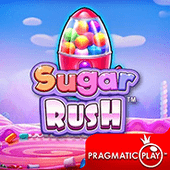
Sugar Rush is a bright cluster-style slot built around falling symbols, cascading wins, and a quick visual rhythm. This guide explains the screen and the decisions around a session without promising a result.
Why Sugar Rush feels different from a line-based reel
The direct answer is that Sugar Rush uses matching groups rather than asking you to follow only fixed paylines. When a qualifying cluster lands, the winning symbols disappear and fresh symbols fall into the open spaces. That cascade can create a chain of separate outcomes inside one paid spin. The mechanic makes Sugar Rush feel active, but motion is not evidence that the next cascade will be larger.
The candy-board presentation is easy to read on a phone: symbols occupy a square grid, the multiplier trail is visible near the playfield, and the result area records the current event. A Sugar Rush Demo, when the live lobby offers one, is useful for learning this layout. It is a viewing or practice environment, not proof of how a paid round will behave.
How Sugar Rush turns one decision into a complete round
Start by checking the displayed stake and the available balance. Select a value that fits the entertainment budget you set before opening the game, then confirm the spin control. Sugar Rush resolves the grid automatically: a cluster is assessed, winning symbols may vanish, and the board can refill. Watch the sequence to the end before reading the final balance.
Read the stake, feature information, and any current promotion terms.
Use the lowest practical setting while learning the grid and cascade timing.
Observe which symbols connect horizontally or vertically according to the displayed rules.
Let every cascade settle; do not treat an interrupted animation as a pending win.
Stop at the time or peso limit written in your session plan.
Players comparing tong its go apk files should not use an unknown installation to reach Sugar Rush. A verified browser route or official application is safer because it reduces the chance of modified code collecting credentials. The Tong-its features overview explains the account and access controls that should be checked before any paid activity.
What the Sugar Rush theme changes about the screen
Sugar Rush presents a confectionery palette, rounded sweets, and a playful board. The theme gives each symbol a strong silhouette, which helps a small-screen reader separate colors and shapes during a cascade. The experience is intentionally energetic: several matching groups can resolve in sequence, a multiplier marker can advance, and the soundtrack or animation may make a short session feel faster than the clock suggests.
That energy is presentation, not a signal. The game does not remember that a previous spin produced a chain, and a near-match does not make a future cluster more likely. The practical Sugar Rush habit is to lower the pace: mute sound if it pushes urgency, keep the stake visible, and take a break after a defined number of rounds. Players who want a different quick format can read the Toon Crash round guide and compare how its timing differs from a cascade board.
Which Sugar Rush details deserve a quick comparison
Cluster rule: confirm the minimum matching group and the directions counted on the current rules panel.
Multiplier trail: understand whether the visible value applies to the current cascade or the entire spin.
Demo boundary: treat a Sugar Rush Demo as interface practice, not as a forecast of paid returns.
Volatility: expect uneven short-run results even when the long-run information looks attractive.
Limits: choose time, spend, and a stop signal before the candy board becomes absorbing.
These points also make the page useful for a new tongits visitor. The word “multiplier” describes how a displayed win may be scaled; it does not remove the random element or guarantee that a multiplier will appear.
How a careful player reads the Sugar Rush experience
Think of Sugar Rush as a sequence of independent game results presented in a connected visual story. The first cascade can be exciting, but it should not reset the budget or create a reason to increase the next stake. If the game is part of a broader tongits evening, write down the amount already used before changing categories. A clear record prevents a fast animation from hiding the real cost of the session.
Payment offers, rewards, and bonus language have separate conditions. Read eligibility, expiry, turnover, and withdrawal rules before opting in, and never borrow money to meet a requirement. Sugar Rush can be enjoyable as a themed entertainment choice while still carrying uncertainty. The responsible choice is to leave when the plan ends, whether the last cascade was positive, negative, or merely close.
What to remember before entering Sugar Rush
The step summary is simple: verify the source, read the rules, set the stake, watch one complete sequence, and keep the stop point. Sugar Rush is a cluster-and-cascade slot, a Sugar Rush Demo is for orientation when offered, and neither name should be read as a promise of income. “Volatility” means the size and frequency of results can vary; it is not a prediction for your next spin.
01 — Learn the board. Identify clusters and the visible multiplier before paying for a round.
02 — Keep the pace yours. Cascades can be quick; your budget and clock should remain deliberate.
03 — Separate practice from play. A demo explains controls but cannot model a personal result.
These are real titles from the same lobby. Their icons are access points, not claims about performance; compare the rules and limits for each title before selecting one.